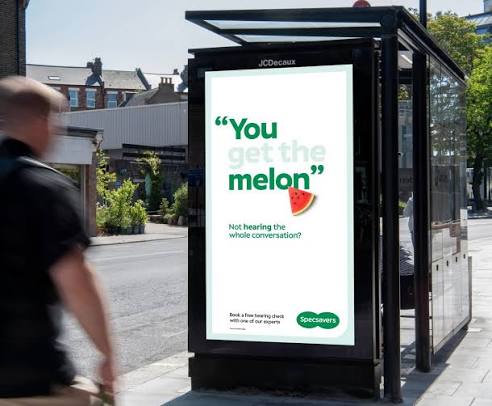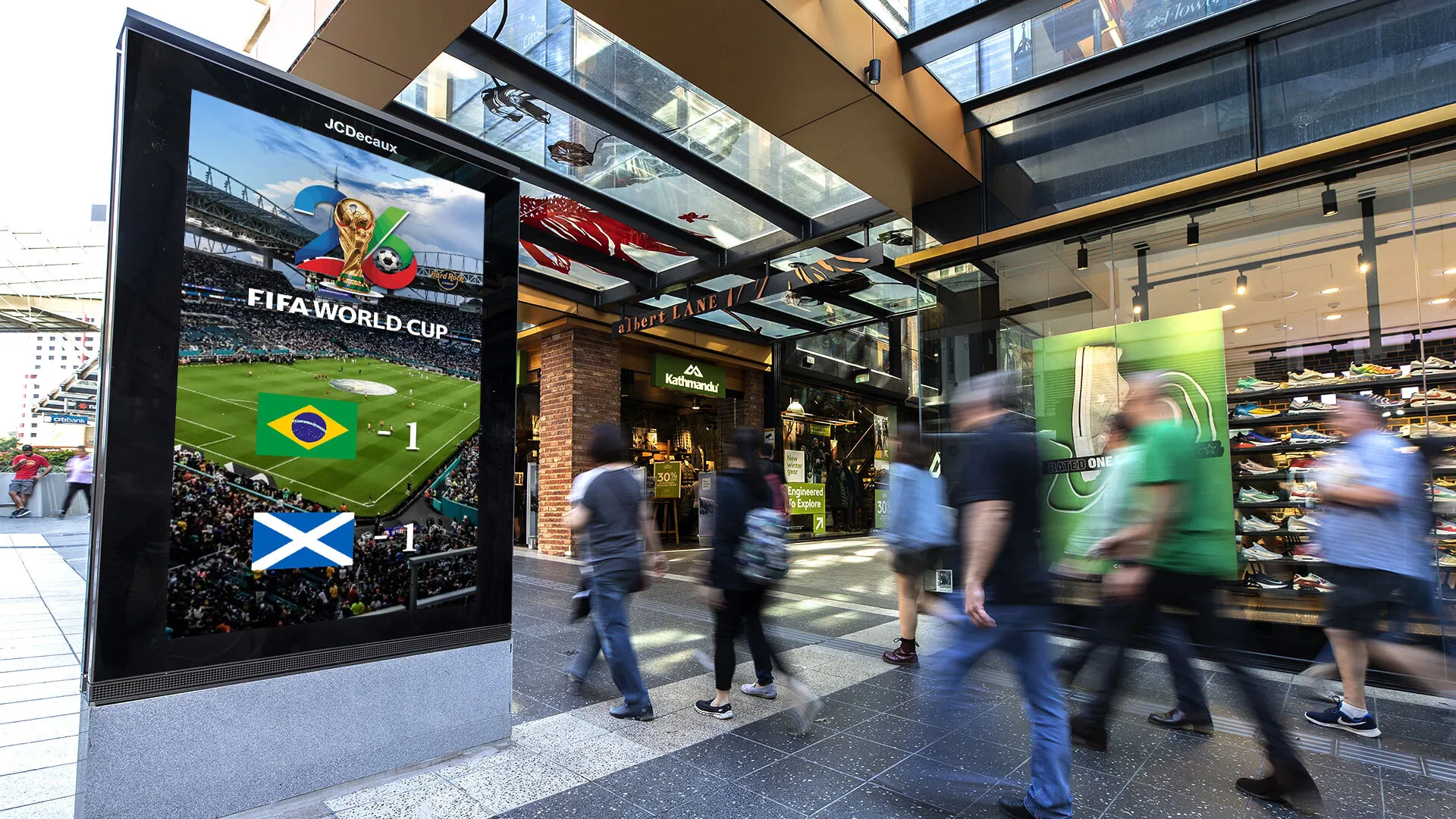
As cities prepare to host the largest FIFA World Cup in history, digital out-of-home (DOOH) advertising is entering a defining moment.
The 2026 tournament will span three countries, 16 host cities, and more than six weeks of continuous fan movement. This scale of physical presence creates a rare media environment — one where attention is shared, public, and deeply contextual.
For brands, this is not just a sponsorship opportunity.
It is a turning point for DOOH and programmatic DOOH (pDOOH) as serious, performance-driven media channels.
Why the World Cup Is a Defining Moment for DOOH?
Major sporting events have always driven outdoor visibility, but the 2026 World Cup introduces something new: digital control at physical scale.
Millions of fans will move daily through:
- Transport networks and airports
- City centres and public squares
- Fan zones and entertainment districts
- Retail corridors and stadium precincts
In these environments, traditional digital channels struggle to dominate attention. Mobile and social media compete with the moment itself. DOOH thrives because it exists within the experience, not alongside it.
Digital screens in high-traffic environments allow brands to be present where attention is naturally focused — without relying on personal data or intrusive formats.
The Shift from Traditional OOH to Digital and Programmatic DOOH
For years, outdoor advertising was perceived as static and inflexible. Campaigns were planned far in advance, locked into fixed locations, and difficult to measure.
DOOH and pDOOH change this model.
Modern DOOH advertising allows brands to:
- Schedule campaigns by time of day and location
- Align messaging with live events and real-world context
- Update creative dynamically rather than committing to a single execution
- Measure delivery and optimize performance over time
During the World Cup, this means messaging can adapt to match days, kickoff times, crowd density, and city-specific energy — making campaigns more relevant and efficient.
Why Programmatic DOOH Matters at Global Event Scale
The complexity of a global tournament exposes the limits of traditional planning.
Static outdoor buys cannot react to changing crowd patterns.
Fixed budgets cannot shift toward higher-performing locations.
Manual operations struggle across multiple cities and markets.
Programmatic DOOH solves these challenges by enabling:
- Real-time activation across multiple locations
- Smarter budget allocation based on actual delivery
- Faster response to live conditions on the ground
For brands advertising during the World Cup, pDOOH enables agility; a critical advantage in a fast-moving, high-attention environment.
DOOH as the Physical Layer of Omnichannel Advertising
The most effective World Cup advertising strategies will not rely on a single channel.
DOOH plays a unique role by acting as the physical entry point into broader digital ecosystems.
High-impact digital screens:
- Drive social sharing and organic amplification
- Trigger mobile engagement through QR codes and proximity
- Reinforce brand presence near points of sale and experience
Rather than competing with digital media, DOOH enhances it by grounding campaigns in real places and moments.
Experience-Led Advertising in High-Attention Environments
World Cup audiences are not passive. They are emotionally invested, socially connected, and highly aware of their surroundings.
This is why experience-led DOOH formats perform strongly:
- Large-format and premium digital screens
- Live and context-aware creative
- Messaging aligned with the atmosphere of the moment
When advertising becomes part of the environment, it feels less like interruption and more like participation — driving stronger recall and brand impact..
What the 2026 World Cup Will Prove About DOOH Advertising
The tournament will demonstrate that DOOH and pDOOH can deliver:
- Mass reach without excessive waste
- High visibility with measurable control
- Brand impact in environments where attention is real
For many brands, the World Cup will serve as a live test case, redefining how outdoor media fits into modern media planning.
Where The Neuron Comes In
As OOH becomes more digital and programmatic, success depends on more than a creative ambition.
It requires the right technology infrastructure.
The Neuron helps brands and agencies plan, activate, and manage campaigns with the control and flexibility expected from digital media.
Through a single platform, The Neuron enables teams to:
- Access multiple DOOH networks across markets
- Plan campaigns using real-world and contextual data
- Activate and manage campaigns across cities efficiently
- Optimize delivery to reduce wasted exposure
In the context of large-scale events like the World Cup, this approach allows brands to remain responsive, consistent, and in control — even across complex, multi-market campaigns.
Looking Beyond the World Cup
While the 2026 World Cup will accelerate adoption, the impact of DOOH and pDOOH will extend far beyond the tournament.
As outdoor advertising becomes more measurable, flexible, and data-driven, it is increasingly positioned as a long-term, always-on channel rather than a tactical add-on.
The World Cup will show what DOOH can do at scale.
The brands that succeed will be those that continue applying these capabilities long after the final match.